


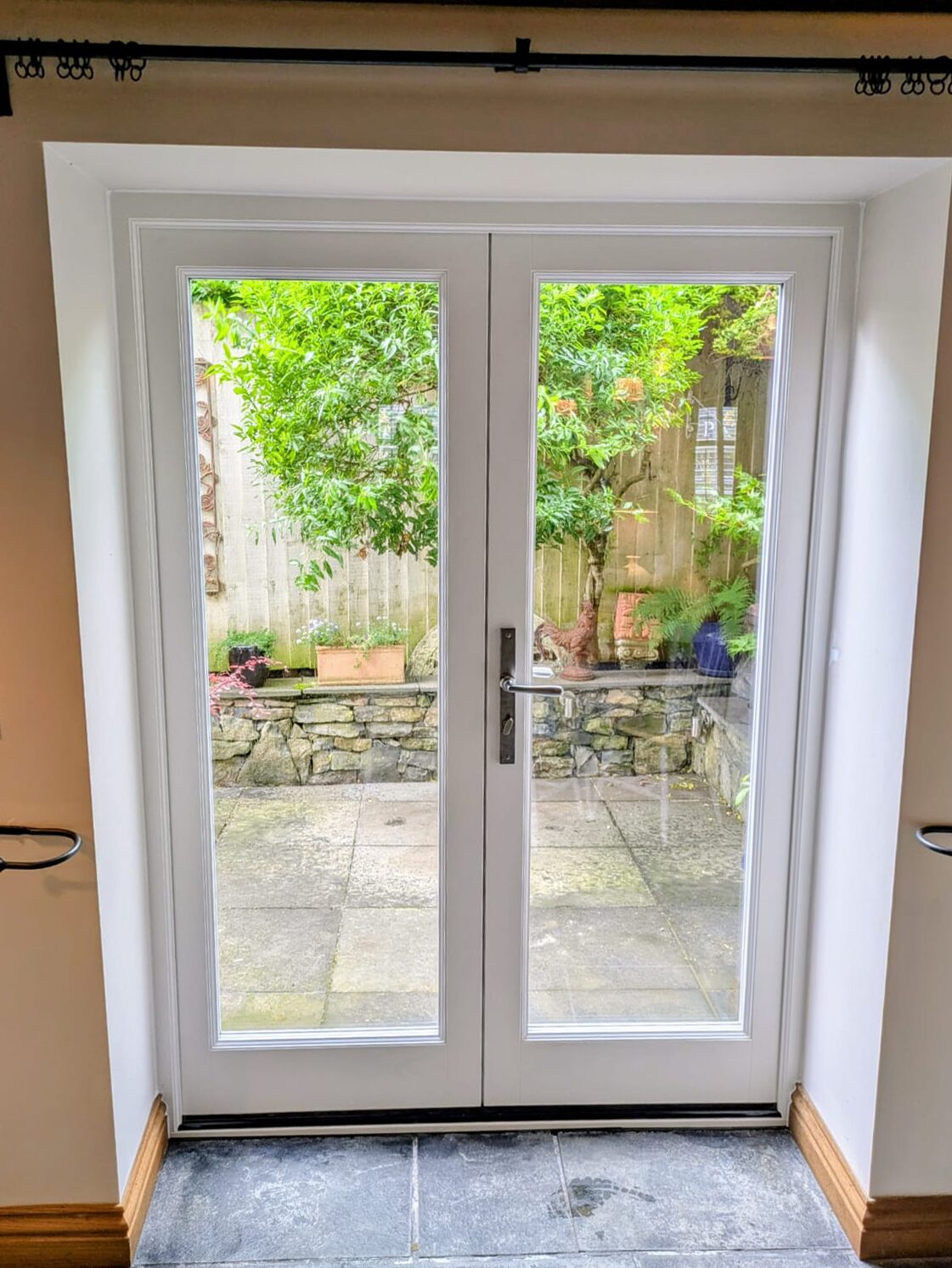
What Is Accoya Wood and Is It Good for Windows and Doors?
If you are wondering whether Accoya windows and doors are worth it, the clearest answer is yes – for the right project, Accoya is one of the strongest timber choices available for windows and doors.
It is not positioned as a budget material, nor should it be. Accoya tends to appeal to homeowners who are looking beyond the initial purchase price and focusing instead on how their joinery will perform, look and last over time. For bespoke timber windows and doors, especially on period homes, architect-designed renovations and quality-conscious extensions, that makes it a very compelling option.
At Patchett Joinery, Accoya is valued for what it allows us to create: beautifully made timber joinery with crisp detailing, excellent stability and a finish that holds its character year after year. That is where the material earns its place.
What is Accoya wood?
Accoya is a modified timber designed to deliver greater durability, stability and resistance to moisture-related movement than many standard timbers.
For most homeowners, the technical process behind it is less important than what that process achieves. In practical terms, Accoya is engineered to move less as temperatures and moisture levels change. That matters enormously in external joinery, where windows and doors are constantly exposed to the elements and expected to continue opening, closing and looking right across the seasons.
The result is a timber that is especially well suited to painted external joinery. That is one reason Accoya is often discussed alongside the best timber for outdoor use, particularly where long-term external performance is a priority. It holds its shape impressively well, supports a very refined finish and offers the sort of consistency that premium homes demand.
Is Accoya good for windows and doors?
Yes. Accoya is exceptionally good for windows and doors, particularly where long-term performance is a priority.
That is because good joinery depends on more than appearance alone. A window or door can be beautifully designed, but if the timber is too prone to swelling, shrinking or distortion, the end result will never be as reliable or as enduring as it should be. Accoya helps solve that problem by offering a much more stable base material.
For homeowners, that translates into something reassuringly simple: windows and doors that are better equipped to stay elegant, functional and well-finished over time.
Why do homeowners choose Accoya?
The appeal of Accoya usually comes down to a combination of performance and peace of mind. Homeowners are often drawn to it because they want their joinery to feel like a serious, lasting investment rather than a compromise that may need more attention sooner than expected.
What sets it apart is not one single headline feature, but the way several qualities come together. Accoya is known for its dimensional stability, its durability, its paint retention and its suitability for exposed external use. When combined with expert design and craftsmanship, those qualities make it particularly attractive for bespoke windows and doors.
This is especially true on homes where architectural character matters. On a period property, for example, the value of a high-performing timber is not just practical. It also helps preserve the visual precision of glazing bars, mouldings, sightlines and fine details that cheaper or less stable materials can struggle to maintain as neatly over time.
Are Accoya windows worth it?
This is the real question for most people, and it deserves a straight answer.
Yes, Accoya windows can absolutely be worth it – but they make the most sense when the decision is being made from a long-term perspective. If the sole aim is to reduce initial spend, there are cheaper routes. But if the goal is to invest in windows or doors that are likely to require less intervention, hold their finish more successfully and offer a more dependable lifespan, then Accoya becomes much easier to justify.
The value lies in what it helps prevent as much as what it provides. Less movement in the timber can mean less stress on joints, coatings and the overall integrity of the joinery. Over time, that can contribute to a more dependable and less demanding ownership experience.
For premium homes, that matters. For homeowners still weighing up material routes more broadly, our comparison of timber vs uPVC windows is a useful next step. When windows and doors are a defining part of the architecture, a timber that supports both performance and finish quality is not a luxury for its own sake. It is often the sensible choice.
How long does Accoya last?
One of the strongest arguments in Accoya’s favour is lifespan.
Homeowners looking into Accoya often do so because they want a timber that will justify the investment over many years, not simply look good at the point of installation. In that respect, Accoya has a strong reputation. It is widely chosen for its durability and for the way it continues to perform in demanding external conditions.
Of course, no lifespan can be separated entirely from design, manufacture, finishing and maintenance. A well-made Accoya window will always perform better than a poorly designed one, just as excellent joinery in another high-quality timber may outperform mediocre work in a premium material. But all else being equal, Accoya is widely regarded as one of the most durable and stable options available for external timber joinery.
That is a significant part of why it is so often chosen for homes where quality and longevity are central to the brief.
How does Accoya compare with hardwood and softwood?
This is where the conversation becomes more useful than simple marketing claims.
Softwood, hardwood and Accoya can all be used for windows and doors, but they do not offer exactly the same proposition. Softwood is often the most affordable route upfront, though it will not usually deliver the same long-term performance or stability as Accoya. Hardwood can be an excellent choice when carefully selected and properly manufactured, but “hardwood” is a broad category, and performance varies considerably depending on species and quality. For example, our guide to Red Grandis timber looks at another premium timber option for bespoke joinery.
Accoya sits slightly apart because it has been developed specifically to perform exceptionally well outdoors. For painted timber joinery in particular, that gives it a very clear advantage.
A useful way to think about the comparison is this:
- softwood may suit projects where budget leads the decision
- hardwood can be an excellent premium option, depending on the species and intended finish
- Accoya is often the strongest choice when stability, durability and long-term coating performance are the priority
That is why many homeowners comparing Accoya vs hardwood windows are not really choosing between “good” and “bad”. They are choosing between different kinds of premium value. If natural grain and a particular timber character are central to the design, hardwood may appeal. If the project calls for painted windows or doors with excellent long-term consistency, Accoya is often the more compelling answer.
Does Accoya need less maintenance?
It generally does, yes.
No timber window or door is entirely maintenance-free, and it would be misleading to suggest otherwise. High-quality timber joinery still benefits from sensible care and periodic inspection. But one of Accoya’s most attractive qualities is that it can reduce some of the common pressures that make external joinery more demanding to own.
Because the timber is so stable, paint systems tend to perform more effectively over time. That can help extend redecoration intervals and reduce the likelihood of the visible movement or surface stress that often undermines the appearance of lesser-performing materials.
In practical terms, Accoya is often chosen by homeowners who want the beauty of painted timber, but with a lower-maintenance experience than they might expect from standard softwood joinery. For day-to-day upkeep, our advice on how to clean your timber windows naturally is a practical place to start.
What about sustainability?
Accoya’s sustainability credentials are an important part of its appeal, but they are most meaningful when understood in the context of longevity.
Homeowners who care about sustainability are often looking for more than a label or a headline claim. They want to know whether a material is responsibly sourced, whether it has been chosen intelligently and whether it is likely to stay in service for the long term. Accoya speaks well to that way of thinking.
A timber that performs well for many years, requires less frequent replacement and supports enduring, repairable joinery can make a strong case for itself environmentally as well as practically. For many design-conscious homeowners, that combination of responsibility and longevity is exactly the point.
Where does Accoya make the biggest difference?
Accoya tends to prove its worth most clearly on projects where expectations are already high.
It is especially well suited to bespoke painted windows, external doors, entrance screens and other joinery elements where stability and finish quality are central to the result. It also works particularly well on exposed elevations, on period homes where refined detailing matters, and on architect-led projects where the windows and doors need to sit confidently within a carefully resolved design.
On these kinds of homes, materials are rarely chosen in isolation. Our Accoya sliding sash window installation in Ilkley, West Yorkshire offers a good example of how the material performs on a carefully considered residential project. They are chosen because they support the standard of the whole project. That is where Accoya feels most at home.
Is Accoya the only good option?
No – and that is worth saying clearly.
Accoya is one of the best materials available for many window and door projects, but it is not the only credible option. Patchett Joinery works with a range of high-quality timbers, and the right recommendation always depends on the building, the design, the intended finish and the priorities of the client.
Some homes call for a different timber species because of planning sensitivity, visual preference or project-specific requirements. What matters is not chasing one named material for its own sake, but choosing the timber that best supports the architecture and the quality of the finished joinery.
That said, when the brief points towards painted timber windows or doors with outstanding stability and long-term performance, Accoya is often difficult to overlook.
Speak to Patchett Joinery about bespoke Accoya windows and doors
Choosing the right timber for windows and doors is rarely just a technical decision. It is about how the finished joinery will look, feel and perform within the architecture of your home.
For period properties, high-specification renovations and bespoke projects, that decision deserves careful guidance. Accoya can be an exceptional choice, but the best result always comes from combining the right material with thoughtful design, refined detailing and expert craftsmanship.
At Patchett Joinery, we create bespoke timber windows and doors for homeowners who want more than an off-the-shelf solution. Our approach is rooted in quality, proportion and finish, with every project shaped around the character of the property and the standard of the home it belongs to. You can also see this in practice in our project featuring Accoya windows for this impressive farmhouse in Addingham.
If you are considering Accoya windows or doors, speak to the experts at Patchett Joinery for advice on the right specification for your project. Our team can guide you through the options, help you understand which timber is best suited to your home, and show you what truly well-made bespoke joinery looks like.
You are also welcome to visit our showroom to see the quality of our craftsmanship up close and discuss your plans in person.
FAQs
Are Accoya windows worth the extra cost?
They often are for homeowners who care about lifespan, lower maintenance demands and the long-term quality of painted timber joinery. The extra cost tends to make the most sense when viewed over the life of the product rather than purely at the point of purchase.
How long do Accoya windows last?
Accoya is widely chosen for its long service-life potential and excellent durability in external applications. Exact lifespan will depend on design, manufacture, finishing and maintenance, but it is regarded as one of the most durable timber options for windows and doors.
Is Accoya better than hardwood for windows?
Not in every situation, but it is often especially strong for painted external joinery because of its stability and coating performance. The right choice depends on the property, the finish and the overall design brief.